
CSCS Endurance Training (5th Edition Update)
Nov 09, 2026Most strength coaches, trainers, PTs, and athletes have followed a Strength program.
Strength testing, sets, reps, tempo, RPE, etc.
But not as many coaches have followed a full endurance training program.
That's what we're going to learn about today.
- What season do Fartlek runs vs. Intervals fit into?
- What's a good target HR for sets of 4 minute intervals? Or for a 6x8 min Tempo run?
- When do you progress intensity vs. volume?
- How does strength training fit into an endurance athlete's program?
The new 5th edition CSCS book added bits and pieces of new information and examples covering seasonality, HR zones, concurrent training, and more.
So today we're going to cover:
1: HR Zones
2: Off Season Aerobic Programming
3: Pre Season Aerobic Programming
4: In Season Aerobic Programming
Let’s jump right into it.
- HR Zones
One of the main additions to the 5th edition CSCS Book was the addition of HR Zones.
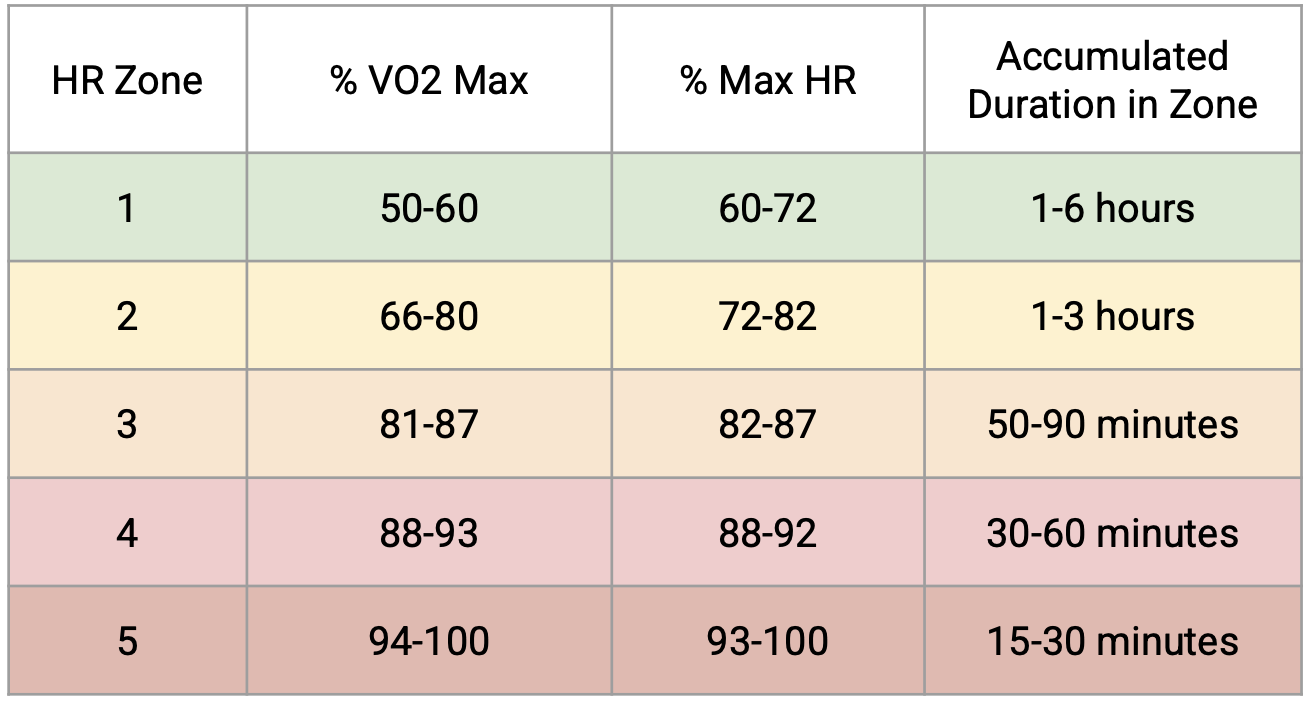
The 5 HR Zone model (shown below) is introduced to show how endurance athletes can distribute their training intensity throughout the week.
You'll notice much longer recommended accumulated duration in the more aerobic zones 1 & 2.
This tends to make up 70-80% of an endurance athlete's training program, since it is highly recoverable and specifically develops the aerobic system.
There is a wide range because total aerobic training volume varies widely from less than 5 hours per week for some athletes with a more minor aerobic component to their sport to 15+ hours per week for highly trained endurance athletes.
That said, no athlete should be accumulating large volumes of training in Zone 4 & 5 without supporting aerobic work.
That would be a program design error (one that many recreational endurance athletes make) that can lead to injury or burnout.
We'll take a look at some endurance training programs that follow the guidelines next.
- Off Season Endurance Training
Below is an example Off season endurance training program for an intermediate high school cross country runner.
You'll notice that there is one challenging interval session in red.
I like to program this early in the week, to make sure the athlete is fresh and to make sure it gets done.
The rest of the week involves aerobic runs varying from 40 minutes to 75 minutes.
The off season is a time period for athletes to build an aerobic base.
Most of the work should be aerobic and recoverable and relatively easy to follow without the presence of a coach.
The specific weekly training volume can vary depending on the experience level of the athlete, however this is within a typical, appropriate range.
Lastly, you'll notice 2 weekly full body strength training sessions on non consecutive days.
Ideally these should provide the athlete with a reasonable dose of plyometrics and heavy compound, axial loaded lifts like squats, deadlifts, step-ups, hip hinges, marches, lunges, etc.
Specific exercises such as a long lever bridge targeting the hamstrings may be introduced here or in the pre season as specificity becomes increasingly important.
We cover Aerobic Endurance Training Program Design in much more detail in the new chapter 21 module we just added to The Movement System CSCS Course.

- Pre Season Endurance Training
Here is a pre season training program for a beginner triathlete competing in a 70.3 Ironman race.
This is the type of program that is typically followed for 12-16 weeks leading up to the race (with an appropriate volume build up and taper at the end).
You'll notice 3 runs, 2 rides, and 1 swim. This is one way to breakdown the training week, but the ratio can vary throughout the program or be modified to the athlete's preferences or weaknesses.
Perhaps more important to the recoverability and effectiveness of the program, however is the ratio of aerobic work vs pace/ tempo work.
You'll notice 1 fartlek session, which alternates between an aerobic (~70%) and an interval (~85%) intensity.
This is a good way to get some intensity into a beginners program without a full, high stress interval session.
Next, you'll see 1 full body strength session per week. This is most appropriate for a beginner who is already handling high training stress from the volume of aerobic work.
Expect to just maintain strength to support aerobic training with this. And leave time in the off season to add a second or possibly third strength session per week to build strength.
Finally, you'll notice 4 aerobic sessions ranging from 30-70 minutes.
For a beginner looking to simply complete the event, this is an appropriate volume for the middle of the pre season program. Ideally working up a little closer to race distance especially for the long sessions in the 6-8 weeks prior to the race.
For intermediate to advanced athletes competing for an age group podium spot, expect twice this weekly volume or more.

- In Season Endurance Training
Lastly, we have an in season program for an intermediate collegiate cross country runner.
This program is built around a Saturday race day.
You'll notice that Monday and Tuesday are the most intense training days.
Full body low volume strength training and a Fartlek run on Monday.
This is followed by a Pace/ Tempo run on Tuesday with 4 x 6 minute intervals at race pace (~85-90% MHR) on 2 minutes rest.
From there, the rest of the training sessions are aerobic.
For an intermediate cross country runner volume is still going to be relatively high (50+ miles/ week is common at the higher levels of performance).
So Wednesday is a 70 minute aerobic run.
Thursday and Friday are aerobic runs as well tapering volume leading up to the race.
And to keep technique fresh, 15 second strides are layered into the Friday run.
If you're studying for your CSCS exam, practice writing out programs similar to these and the book examples from scratch.
That's the best way to make sure that you're not just familiar with the material, but actually able to come up with it yourself on the exam.

Stay connected with news and updates!
Join our mailing list to receive the latest news and updates from our team.
Don't worry, your information will not be shared.
We hate SPAM. We will never sell your information, for any reason.
