
CSCS 5th Edition Plyometric Volume Guidelines
Oct 07, 2026If you coach plyometrics, there's a good chance your number one question is:
"How much volume is appropriate"
That's what we're going to answer today with the updated plyometric volume guidelines in the new 5th edition CSCS book.
Let’s jump right into it.
The Old 4th edition Guidelines Didn't Cut It
The Old CSCS Plyometric guidelines from the 4th edition book were:
Beginners: 80-100 contacts
Intermediate: 100-120 contacts
Advanced: 120-140 contacts
The problem though, is that 100 reps of pogos and skips is a very different stimulus than 100 reps of depth jump and hops.
So the updated guidelines below aim to fix this.
The New CSCS Plyometric Volume Guidelines:
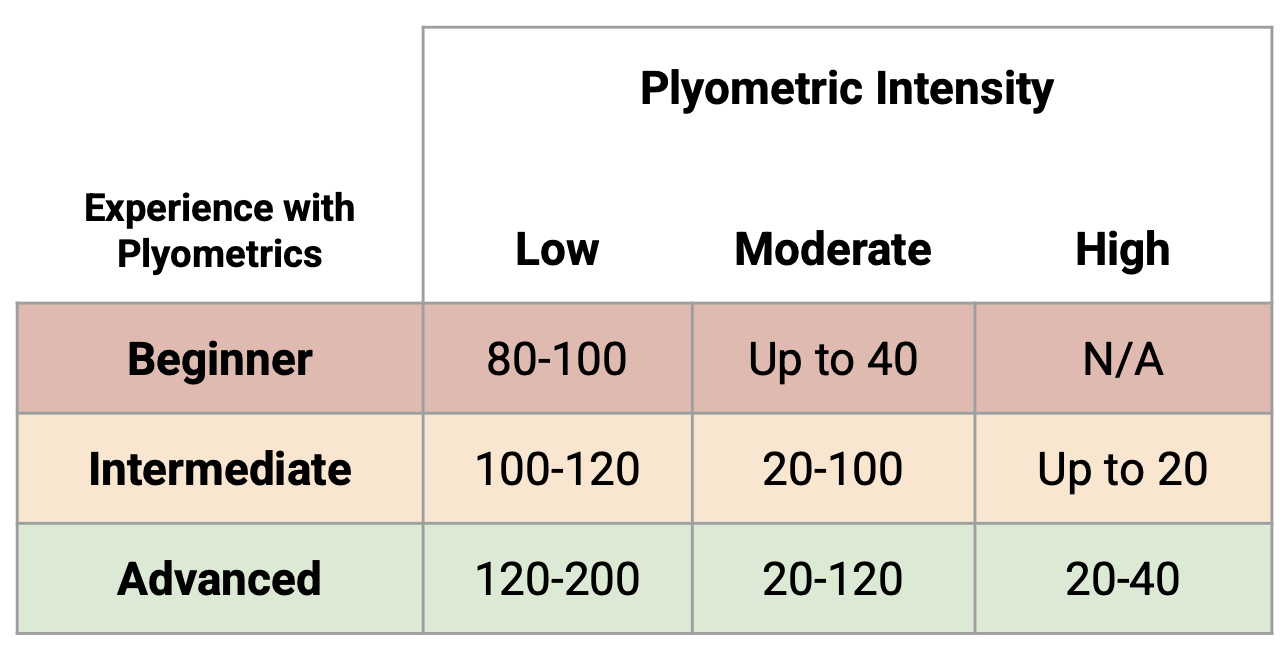
The 5th Edition CSCS Book guidelines now provide separate recommendations for low, moderate, and high intensity exercises.
For beginners, only low to moderate intensity exercises are appropriate.
If programming low intensity exercises for beginners, it would be appropriate to program 80-100 total foot contacts in a session.
Importantly, this constitutes a full training session.
Perhaps after 6 weeks of low intensity plyos a beginner can progress to moderate intensity plyos.
A full plyometric training session for that beginner could then include up to 40 contacts of moderate intensity plyometrics.
Now you might be wondering, can you combine low and moderate intensity plyometrics?
And this is considered appropriate, however it's not explicitly stated how the guidelines are used in this case.
It should be assumed though, that you would not program on the high end of both.
For example, 100 foot contacts of low intensity and 40 foot contacts of moderate intensity plyos would not be an appropriate stimulus.
However, a more moderate mix of for example 50 contacts of low intensity and 20 contacts of moderate intensity may be appropriate.
And coaches should use the principles of periodization and good program design to decide when it is appropriate to program low vs. moderate vs. high intensity plyometrics for athletes.
Plyometrics for Intermediate Athletes
Intermediate athletes can perform low, moderate, or high intensity plyometrics.
Prioritizing low intensity may be most appropriate in the early off season or GPP phase when an athlete is building a base of general physical preparedness.
Intermediate athletes defined as having "Some plyometric experience" may then move to moderate intensity exercises and high intensity exercises as they approach their competitive season.
Below is an example of a pre season plyometric program for an intermediate level athlete with around 50 contacts of moderate intensity plyometrics.
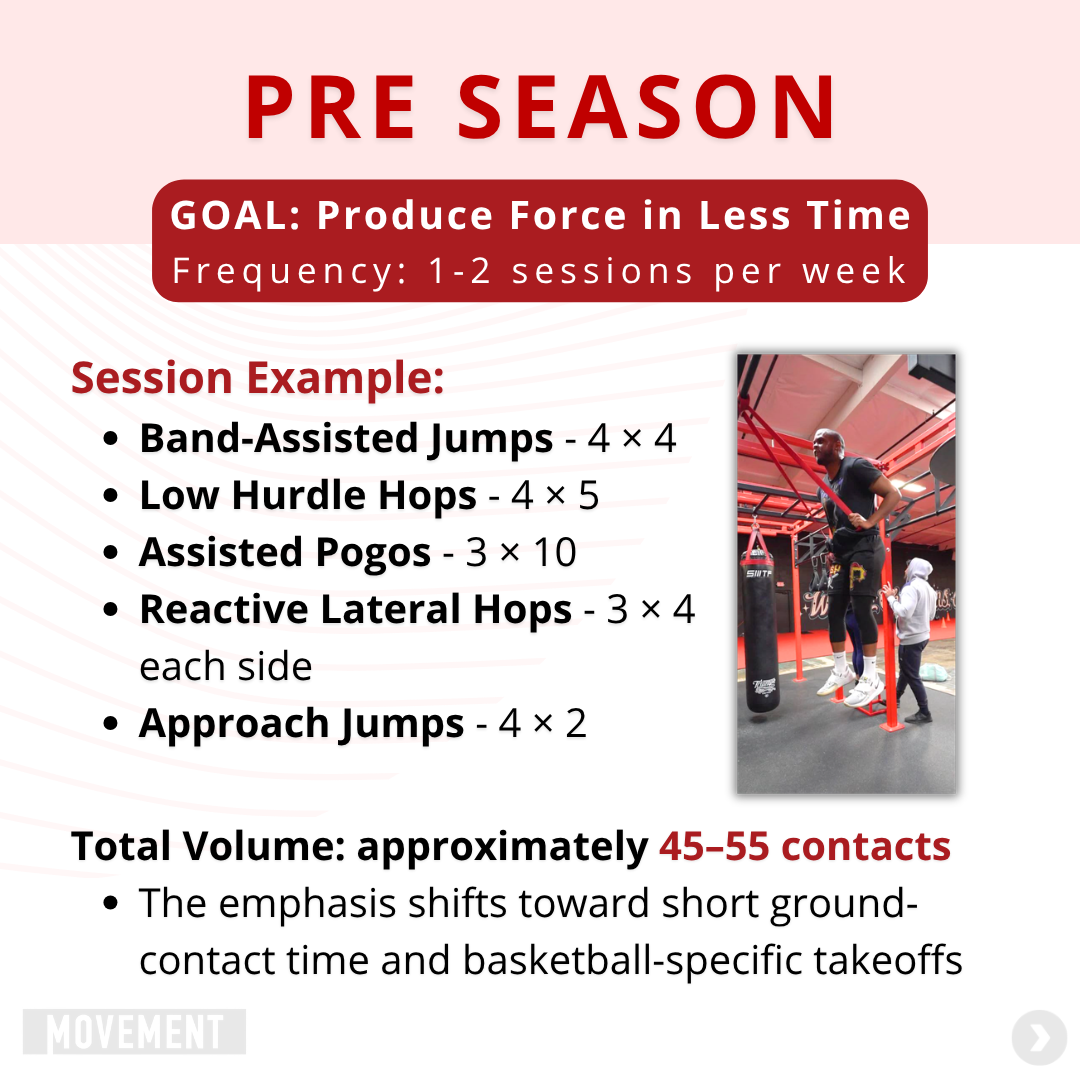
And this post I put up recently has examples of a full year of complete plyometric programs if you want to see more examples.
Plyometric Volume for Advanced Athletes
Advanced athletes can handle high volume low intensity plyometrics (120-200 contacts) or a low volume of high intensity plyometrics (20-40 contacts)
Again, high volume and low intensity would be most appropriate off season according to the traditional periodization model, with higher intensity work being increasingly programmed approaching the competitive season.
Frequency varies by athlete and can range from 1-4 sessions per week with 2-3 being appropriate for most advanced athletes.
And these should be spaced apart rather than performed on consecutive days when possible.
Some other things that are important to mention from the new plyometric training chapter include:
Upper body plyos are generally programmed 3-5 sets of 3-5 reps
Depth Jumps: Rest 5-10 seconds between reps and 2-5 minutes between sets
All other plyos 1:5 to 1:10 work to rest ratio
Depth jumps are contraindicated for youth athletes and masters athletes with a history of injuries such as meniscus removal.
Alright, those are some of the updates to plyometric training from the new CSCS book.
I hope you learned something today!
P.S. We added a brand new Plyometrics module to The Movement System CSCS Study Course. It includes 55 plyometric exercise technique practice questions and covers all the updated 5th edition information. Once you sign-up for the study course, you'll have lifetime access to the course and automatically receive all future updates.
Stay connected with news and updates!
Join our mailing list to receive the latest news and updates from our team.
Don't worry, your information will not be shared.
We hate SPAM. We will never sell your information, for any reason.
